
27 Oct LLP Annual Compliance in India: Form 8 & Form 11
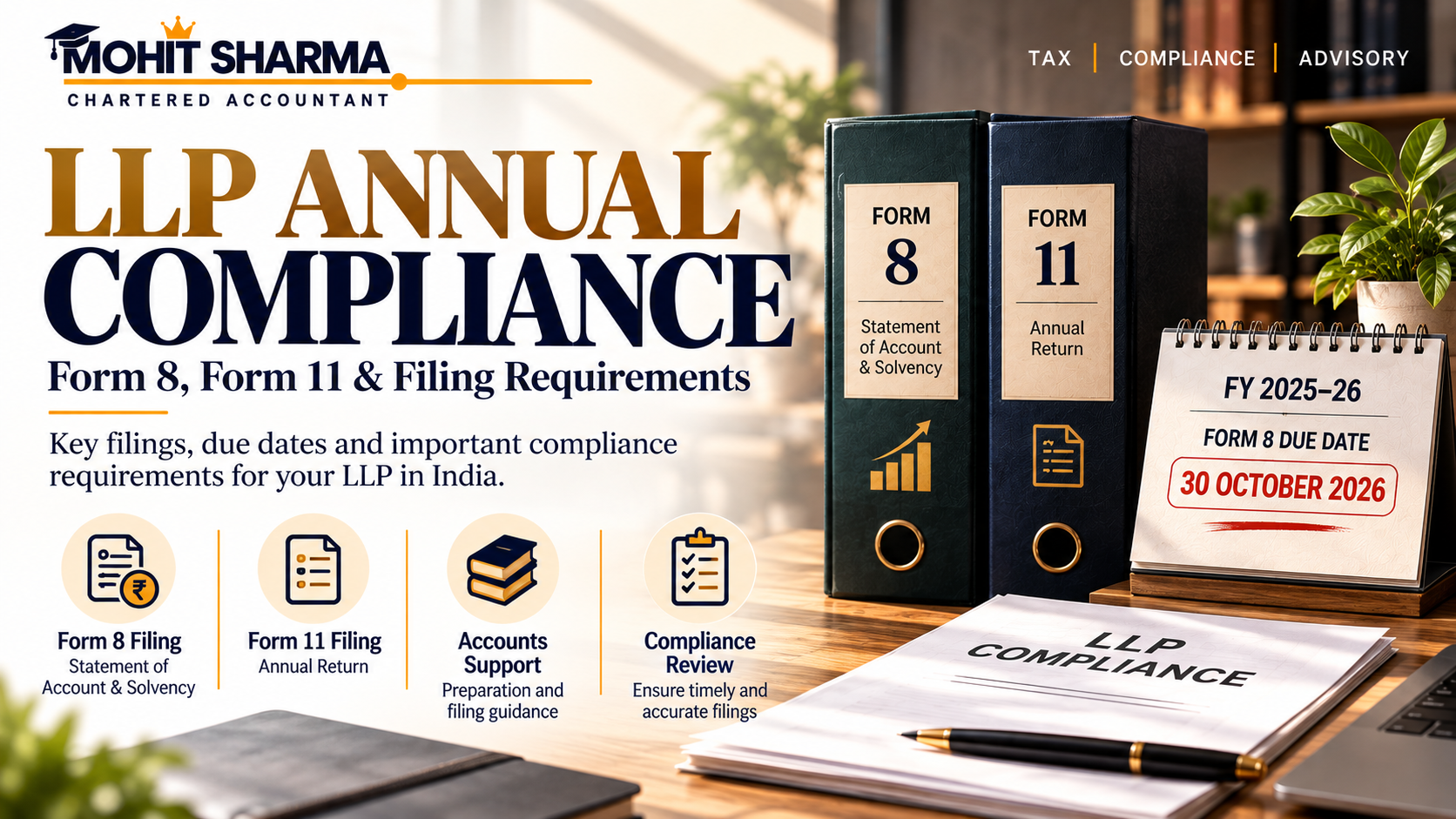
LLP Annual Compliance in India: Form 8, Form 11 & Filing Requirements
Running a Limited Liability Partnership (LLP) involves more than registering the business. LLPs must also maintain appropriate financial records and meet applicable annual filing and tax compliance requirements.
Understanding LLP annual compliance can help partners track important deadlines, keep statutory records updated and reduce the risk of avoidable additional filing fees.
If you operate an LLP in India, here is a practical overview of Form 8, Form 11 and income tax return filing.
What Is LLP Annual Compliance?
LLP annual compliance refers to the recurring reporting and filing requirements applicable to a registered Limited Liability Partnership under Indian law.
These requirements generally include filing the LLP’s annual return, submitting its Statement of Account and Solvency, maintaining financial information and meeting applicable income tax obligations.
The exact requirements may vary depending on the LLP’s financial year, activities, accounts and individual circumstances.
1. LLP Form 8: Statement of Account and Solvency
Form 8 is filed with the Ministry of Corporate Affairs (MCA) to report an LLP’s Statement of Account and Solvency.
It includes applicable financial information and a declaration relating to the LLP’s solvency.
For an LLP following the standard financial year ending on 31 March, Form 8 is ordinarily due within 30 days after the end of six months from the financial year-end.
For FY 2025–26, the standard Form 8 due date is 30 October 2026.
As of 27 October 2026, LLPs preparing to file Form 8 should review their records, check the MCA portal for any separate applicable notification and arrange filing promptly.
An extension announced for certain company forms should not be assumed to apply to LLP forms.
2. LLP Form 11: Annual Return
Form 11 is the annual return that an LLP files with the Registrar.
It includes information about the LLP’s partners, designated partners, contributions and other particulars required under the applicable filing rules.
The standard deadline is within 60 days after the end of the financial year. For an LLP whose financial year ended on 31 March 2026, Form 11 was ordinarily due on 30 May 2026.
Form 8 and Form 11 serve different purposes. Filing one does not replace the other.
If either filing is pending, review its current status and the applicable fee or compliance consequences before submitting it.
3. Does an LLP Need to File If It Has No Business Activity?
An LLP should not assume that no sales, no business activity or a business loss automatically removes its annual filing obligations.
Applicable MCA filings may still be required even when the LLP has limited activity. Partners should review the LLP’s financial year, filing status and specific requirements rather than relying on the absence of transactions alone.
4. Is Income Tax Return Filing Separate From MCA Compliance?
Yes. MCA annual filings and income tax return filing are separate compliance requirements.
The Income Tax Department states that every LLP must file its return of income irrespective of the amount of income or loss. LLPs generally use ITR-5 for this purpose.
This means that an LLP should not treat its Form 8 or Form 11 submission as a replacement for its income tax return.
The applicable income tax return due date depends on the relevant filing category and circumstances. Check the current Income Tax Department instructions for the relevant assessment year.
5. Documents and Information to Prepare
Before beginning annual LLP filing, review the following information:
- Financial statements and accounting records for the relevant financial year.
- Partner and designated partner details, including changes during the year.
- Contribution details and information required for the applicable forms.
- Valid digital signature certificates and the required authentication.
- Applicable audit reports, certifications and supporting documents, where required.
- Earlier filing acknowledgements and the LLP’s current MCA filing status.
Preparing and verifying this information in advance can help reduce errors during filing.
6. What Happens If an LLP Files Late?
Late filing may lead to additional filing fees and other consequences under the applicable provisions.
The amount and consequences depend on the form, length of delay, LLP category and relevant rules. Delays may also create avoidable administrative work when the LLP needs updated statutory records or professional documentation.
The practical approach is to maintain a compliance calendar, reconcile records regularly and verify deadlines directly through the MCA portal.
7. Why Professional LLP Compliance Support Can Help
Professional support can help LLP partners understand which filings apply, organize financial information, review documentation and track separate MCA and income tax obligations.
Before submitting a form, confirm that the information is accurate, the correct filing period is selected and all required attachments and authentication are in place.
Need Help With LLP Annual Compliance?
CA Mohit Sharma provides professional assistance with LLP annual compliance, Form 8, Form 11, financial documentation and related tax compliance guidance.
Whether you need support with an upcoming filing or want to review pending LLP compliance, professional guidance can help you understand the requirements applicable to your business.
CA Mohit Sharma — Chartered Accountant
Contact: 8826980093
Disclaimer: This article provides general information and is not a substitute for professional legal, accounting or tax advice. Filing requirements and deadlines depend on applicable laws and the LLP’s circumstances. Verify current instructions and notifications before filing.
No Comments